
ETHR Materials
We’ll walk you through the resource box you’ll be providing to your patients and the items inside that families will take home!
In this lesson:
To view video transcripts.
To see a diagram of the resource box.
To see and download the resource guides.
Keep scrolling:
-
So now that we've talked a little bit about the pieces of ETHR that you'll implement during your clinical visit, I just wanted to share what you'll be giving families. So we are giving families a resource box, and so this is new for ETHR, version 2.0. In the original version that we tested, we just gave people guides.
But one of the things that we heard feedback on is they really wanted more materials and it was, nicer to provide an actual box with different kind of materials rather than just a piece of paper that can get lost. And so in the resource box, there'll be resource guides. There'll be the ETHR card game.
There'll be helpline numbers. And then there will be magnets and stickers. And then also some fun stuff. We have like little stress balls and some gum that have ETHR logo on them just for families. That's as well. So I'm gonna go through some of the materials that are in the box. So there are resource guides, and there's three resource guides.
There's one for caregivers, one for adolescents, and one for the dyad. The dyad are for the family. And all of these resource guides are for the family. So the scripts are the guides that we were talking about earlier in the subsequent video. Those are for you, but these resource guides are for the family.
And the caregiver guide is the one that we recommend that caregivers look at when they're in the waiting room while you're doing the confidential social history with the adolescent. So I'm gonna go through what the guides look like. So we have actually two versions of the guides.
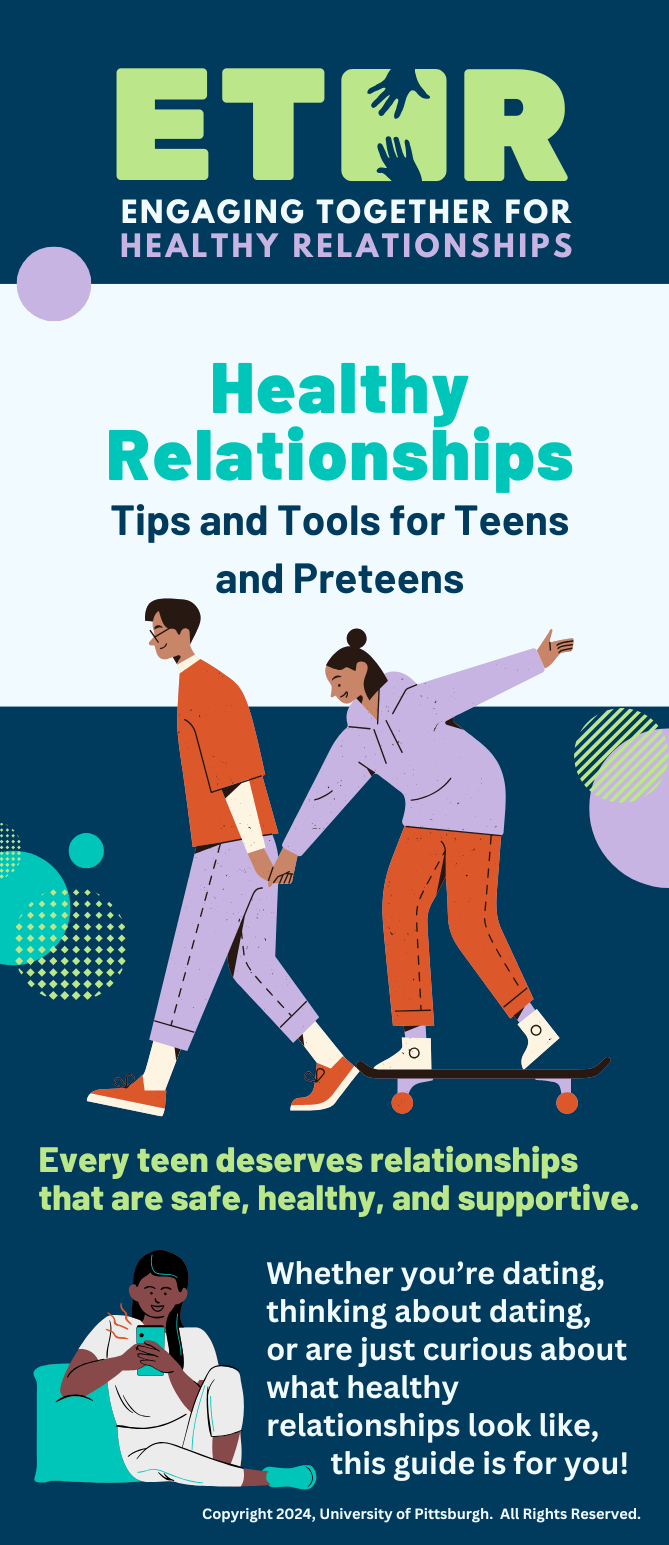
We have a one pager and we have a tri-fold. So the adolescent guide this is what the adolescent guide looks like. It focuses on green flags and red flags. Things to do if somebody notices red flags. The different kinds of dating violence, what to do if someone's hurting a partner or using violence.
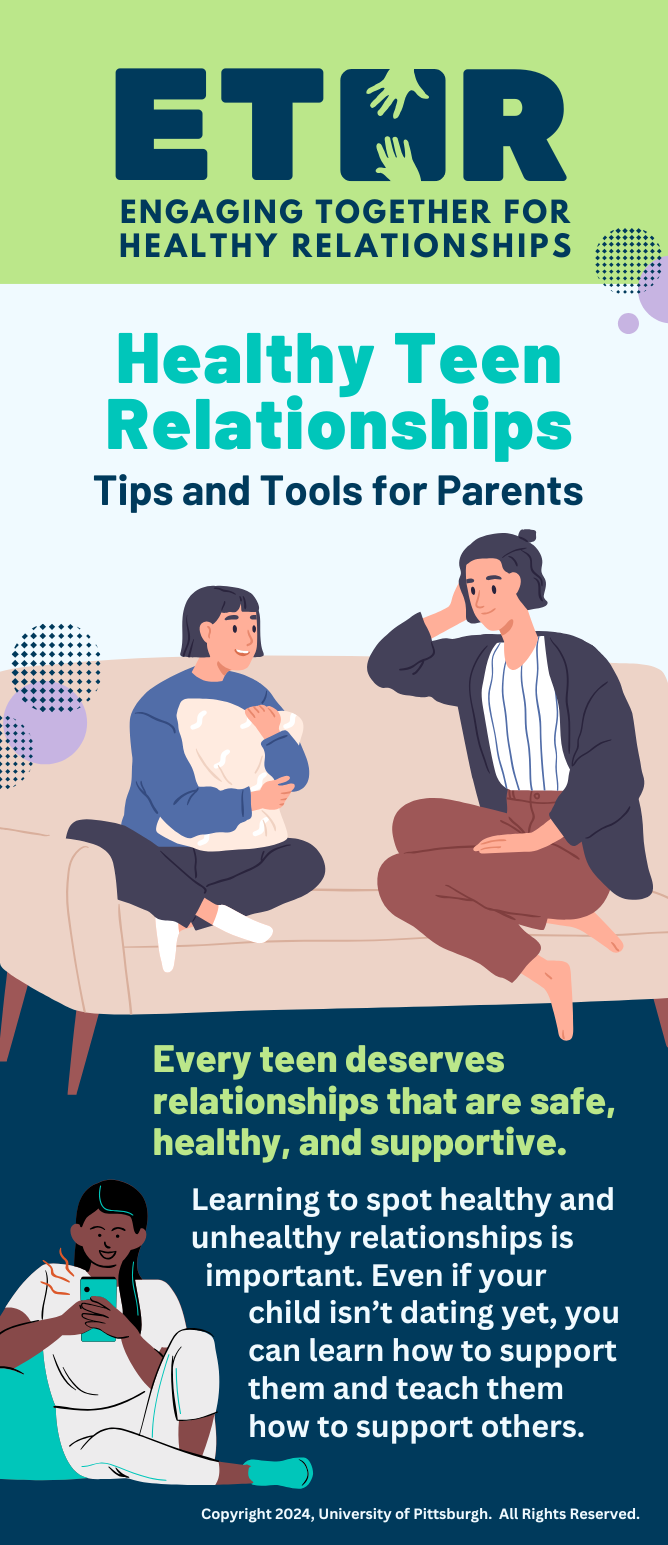
And then it's got lots of helplines. We tried to frame this around how to help a friend as well. So there's some resources about that. The caregiver guide. So it talks similarly, talks about what dating violence is, how common it is how important it is for parents and caregivers to be involved in talking to their kids about dating violence.
Some support that care for caregivers whose. Own children are in unhealthy relationships or whose children's friends are in unhealthy relationships. So we have some, if you can see here, some examples of things that parents can say if they're trying to support a young person through this.
And then similarly helpline numbers as well. We also make it clear in both of the guides that dating violence. And unhealthy relationships can be very challenging to discuss, especially in situations where a parent may have experienced partner violence themselves. So we have that up here, and we also have resources available for parents.
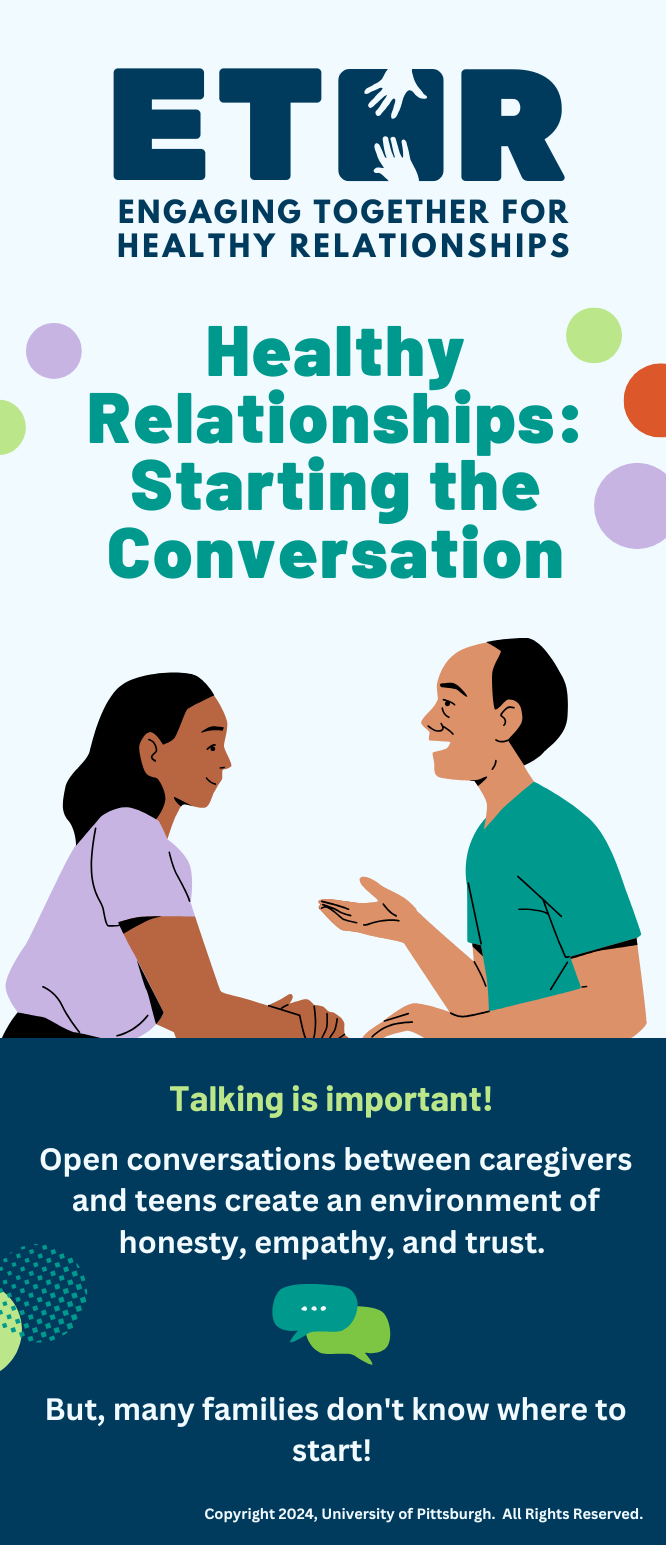
And then the dyad guides. The dyad guide is for the family. It's for the caregiver and the adolescent, and it includes conversation starters. So if you look here how to talk about healthy and unhealthy relationships how to get started, what are some conversation starters that you can use at the beginning and then going deeper?
There's also some content about making a safety plan and then healing together and how families can heal. After, an adolescent has been in an abusive relationship, or while an adolescent is in an abusive relationship, it's also the same resources as well. So those are the three guides and those are the one page guides.
And then here are some examples of the trifold guides. We're gonna be including both of these guides in all of the boxes, and we're interested to know from families which ones they like better. These are the trifold ones and then the game. This is the ETHR card game. It is an actual game that you can play.
It takes about 20 to 30 minutes to play. And it's something that parents and adolescents can play together. People can play as a family, you can play with your friends and it's got conversation starters and hypothetical situations and opportunities for storytelling around healthy and unhealthy relationships.
So we wanted to include something fun that people could use at home to continue these conversations. There are really, clear kind of rules and also some level setting at the beginning just to make sure that everyone is safe playing this game and what the game is going to be about. The other piece to share is that there are a lot of the questions in this game focused on healthy friendships.
So if, for example, a family doesn't wanna talk about romantic relationships, they can use the cards around healthy friendships and talk about that instead. And throughout ETHR, there's a lot of focus on healthy friendships and as well as romantic relationships, which can be tailored to the developmental stage of the adolescent.
And then we've got magnets and a resource card for families. So here are the examples of those. And these are just easy ways to connect with different resources. The resource guides will have national hotlines and then local hotlines. So the two that we include are Love is Respect, which is a specifically teen dating, violence focused national hotline.
And then the National Domestic Violence Hotline, which is a domestic violence intimate partner violence hotline for adults and for teenagers. And then the cards will also include like local to Pittsburgh. Local to Kansas City and we will include the local victim services agency with whom we have a relationship for this project.
And where you can do a warm referral. And then just some fun stuff. We have some gum, some squish balls, some stress balls some stickers. So just some other things with ET, the ETHR logo for families to have that are also in the box.
And in general, this box, we're hopeful that it's got a lot of great resources for families and it's really easy for you to just give to families. You can just pick it up and give it to them. And so hopefully it also keeps all these materials in one place, so it's a little bit easier to keep track of them compared with a piece of paper.
The ETHR box contains
6 resource guides
A family card game
2 business cards
A stress ball
A phone wallet
A sticker sheet
And a pack of gum.
ETHR Resource Box
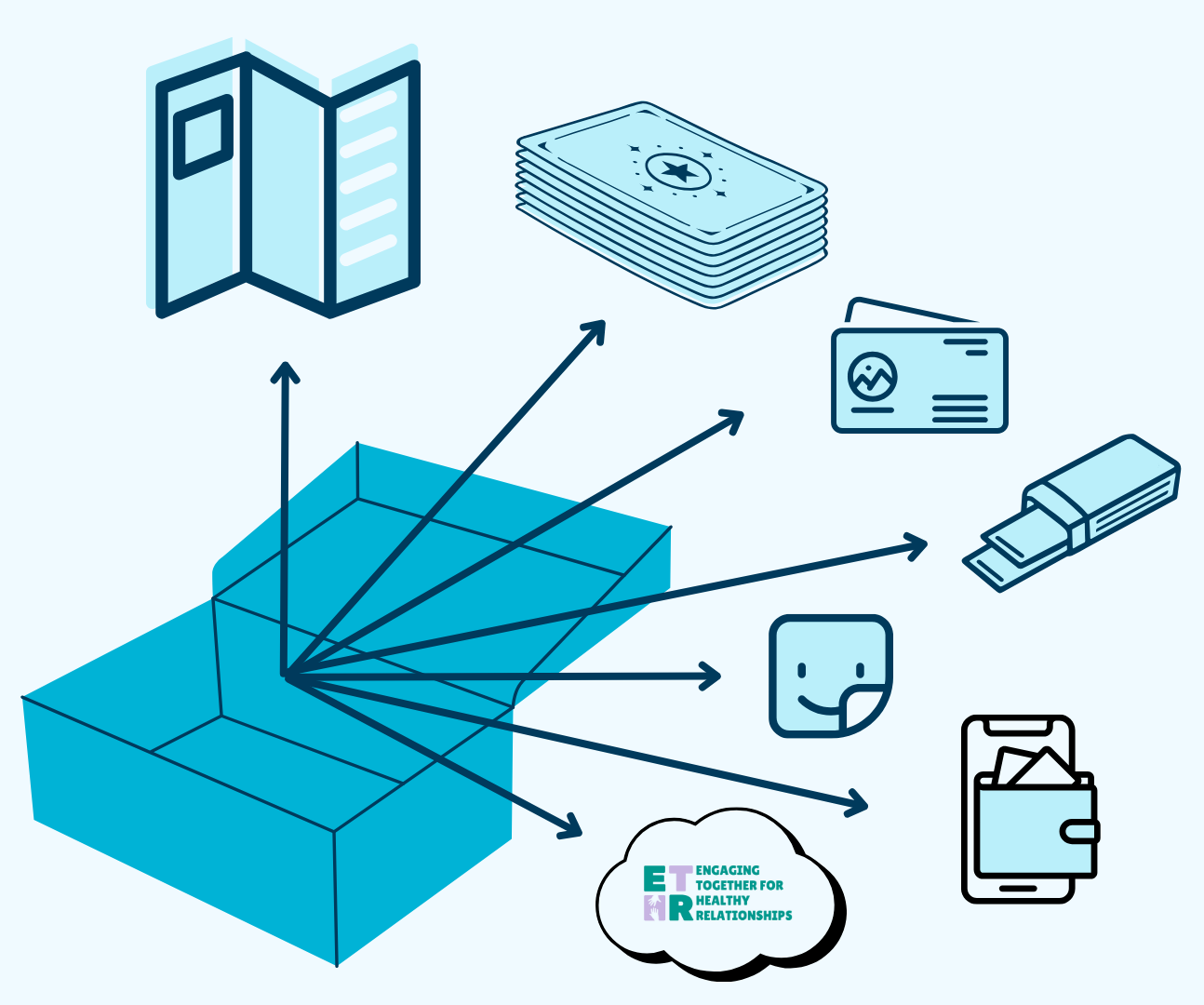
All ETHR resource boxes contain 6 guides: 2 adolescent guides, 2 caregiver guides, and 2 family conversation guides. Each pair of guides consists of similar information but provided in multiple formats. Participants will be asked in their surveys which format they prefer. See the 3 infographic designs and the 3 brochure designs below.
ETHR Resource Guides
Infographics
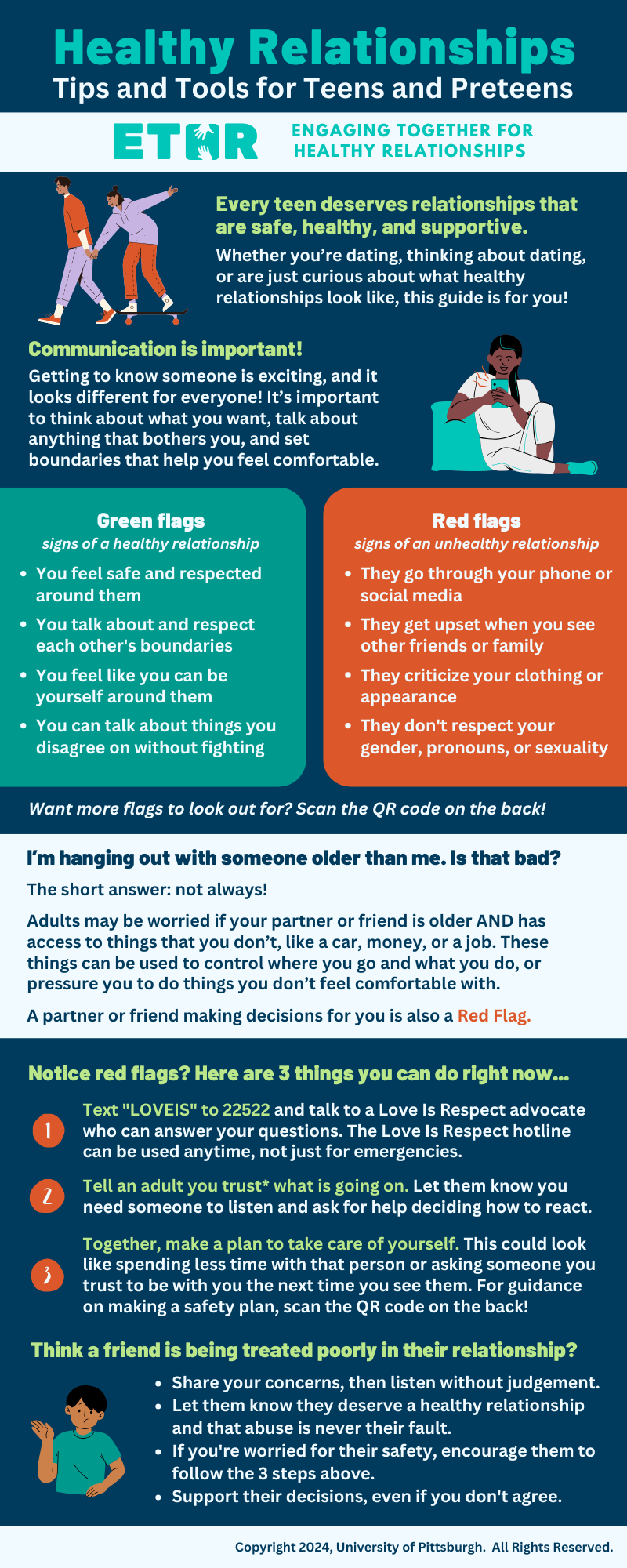
Adolescent
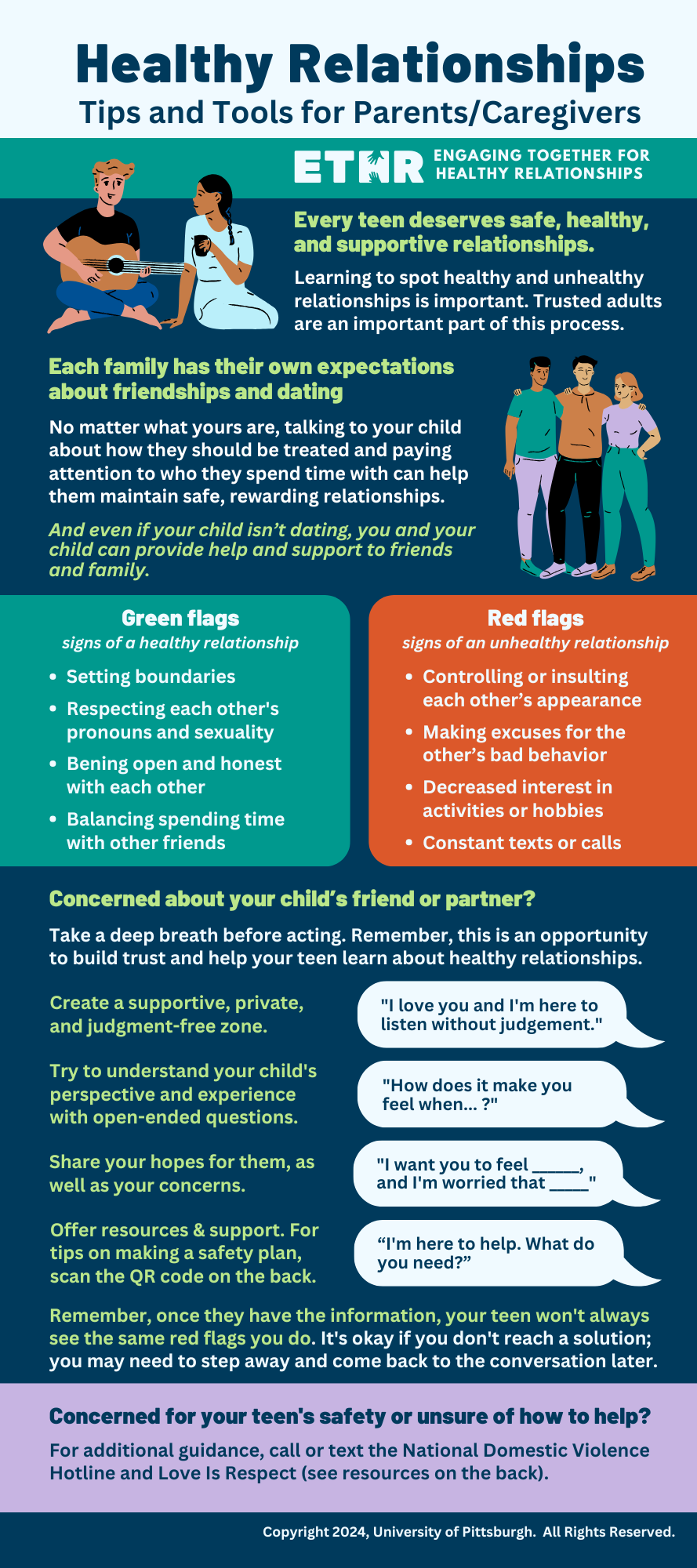
Caregiver
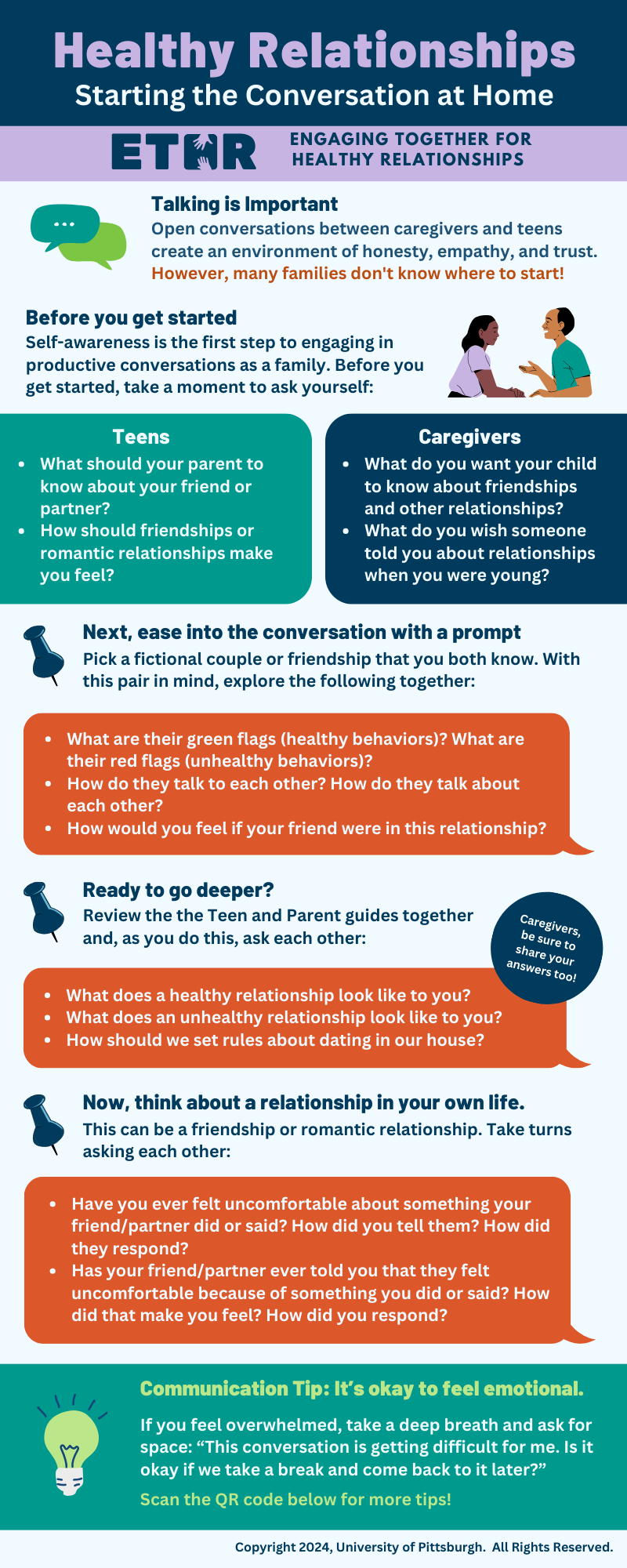
Family
Brochures
Adolescent
Caregiver
Family