
Using ETHR
We’ll review our recommended scripts for responding to disclosures from adolescents or parents, and share the process for warm referrals to the Women’s Center and Shelter (PGH) and to Rose Brooks (KC).
In this lesson:
To view video transcript.
To view the full disclosure scripts.
To learn more about warm referrals.
Keep scrolling:
-
Alright, thank you so much for hearing a little bit about how to incorporate ETHR into your clinical practice. And now for this video we're gonna be talking a little bit about how to respond to a disclosure, either that the parent says that they've been in a unhealthy relationship, or that the adolescent says that they've been in an unhealthy relationship.
So you may be asking, okay, why disclosure? Because we've been talking over and over about how we're not screening for an adolescent relationship abuse. And even though disclosure is not the goal, you're setting up this safe space to talk about these topics. So disclosure may happen, and I will say in our previous
pilot study, it happened more where a parent shared that this is something that happened to them, that they've been in an unhealthy relationship.
So it's just really helpful to make sure that you feel comfortable with what to do if somebody does disclose, and we have a lot of resources to help. So the first thing I wanna share is we have what we're calling our disclosure guides. And so what those are guides that we've created that have verbiage for what you can say.
If somebody, either an adolescent or a caregiver says that they're experiencing partner violence and obviously these are just guides. You don't have to use them verbatim, but they're really helpful. And I think if you wanna look through them, they could just provide the words that you can say that are affirming and that were developed by parents and adolescents.
What our recommendation is after somebody discloses to do what we always do, which is be supportive, be empathetic, validate, affirm, these are some words of affirmation that you can use, and then provide a warm handoff to resources. So a warm handoff is where we provide somebody a direct connection to a resource rather than a resource sheet.
So warm handoff can really make all the difference. And here's just some scripts of how you can provide the [00:06:00] warm handoff. And these are also on the disclosure guides and scripts. So if you'd I can put you on the phone with a local advocate. Right now, they've helped a lot of teens in situations like yours, or you could say, I'd like to have a specific person come and talk to you today.
She knows a lot about dealing with complicated relationships and has helped many teens in similar situations. So this gives a handoff directly to somebody. It also, conveys that you trust that person. So that can really help.
If somebody's meeting a new person, a new advocate, the fact that you trust them, that you've worked with them can make a huge difference in making someone feel comfortable. So this is really survivor centered. And we do have warm referral processes in place for this study. And just in general.
So for Pittsburgh the Women's Center and Shelter is a partner of ours in this study. And so you can contact Janice Goldsboro, who's a medical advocate. This is her phone number if you ever need to make a direct connection for somebody that discloses IPV during these visits.
What I will say is that sometimes people want to call a hotline. Sometimes people want a direct person to call them. So I would offer different
options. So you could say, thank you for sharing with me. Here is a resource that's available that I trust. Would you like to connect with them?
And if so, would you like us to give you their information? Or would you like someone from the organization to contact you? What I will say for warm referrals is if they would like the advocate to contact them, please just make sure you have a good, safe cell phone number for them. And for Kansas City, we're working with the Rose Brooks Center.
So this is the number for the Rose Brooks IPV Advocate. And if you have any questions about warm referrals, please contact either Maya or Kim and we can help you. The one other thing I'll say before I finish is to support you if a young person or parent discloses, we actually have created an interactive activity you can go through.
One story is when an adolescent discloses that they're, in a relationship that's stressful to them. And the other story is a parent discloses that they've been in unhealthy relationship in the past. So it doesn't take very long, like 15 minutes or so. And I'd recommend just going through it 'cause it provides some additional guidance and feedback for you around how to support someone who's disclosed.
Disclosure Scripts
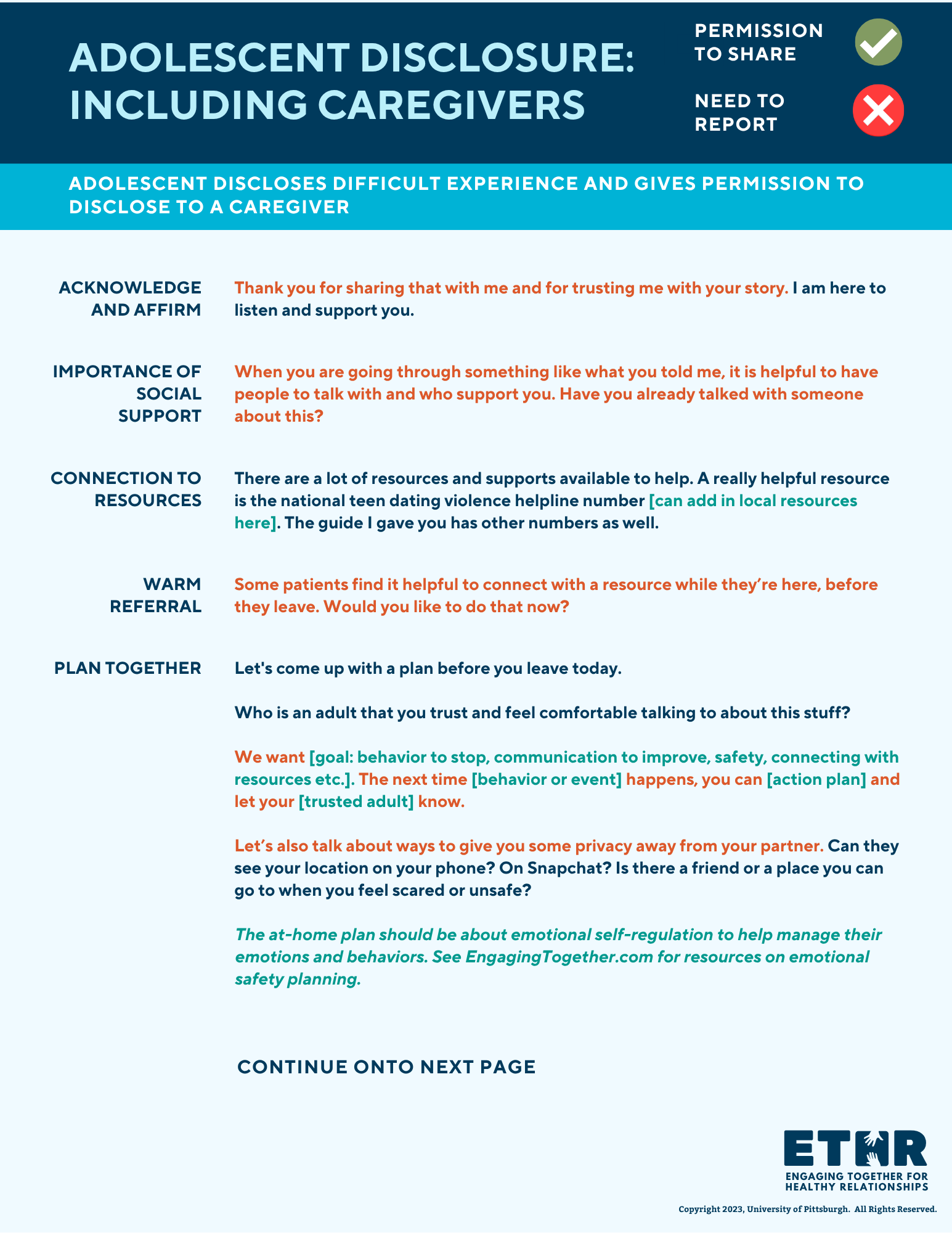
These scripts provide examples of what you can say in specific challenging situations related to ARA and partner violence. Review the scripts for different types of disclosure. As a reminder, these scripts are meant to be guides. You are welcome to change the language in whatever way works best for you and your patients. The key points are in orange. In these scripts, you’ll find suggestions for:
Teen disclosure: Including caregiver
Teen disclosure: Not including caregiver
Teen disclosure: Mandated reporting
Caregiver disclosure
Warm Referrals
The best way to connect a patient or a survivor with their local resources is to provide a warm referral. For this study, we have partnered with your local violence prevention organizations to ensure you have a personal contact to connect your patients with. Review the guidance and your local advocate contacts here.